

Beyond the Brilliance: The True Value of Gold and Diamonds
There are things that never lose their charm, no matter how much time changes—and gold and diamonds are among them. They are not simply precious materials displayed in showcases; they are global symbols of beauty, strength, rarity, and permanence. From ancient civilizations to the age of technology, gold has continued to shine with the language of stability, while diamonds have continued to capture attention through the language of purity.
What is remarkable about gold and diamonds is that their value does not come from price alone, but from the feeling they leave behind. A small gold piece may represent years of work and saving, a diamond ring may carry an unforgettable memory, and a precious gift may become a story passed from one generation to the next.
Rarity: The True Secret of Value
The rarer something is, the stronger our desire to own it becomes. This simple principle explains much of the appeal of gold and diamonds. They emerge from deep within the earth after a long journey through time, pressure, and natural transformation, before passing through precise stages to reach their final form.
Gold requires extraction, refining, melting, shaping, and craftsmanship.
Diamonds require selection, cutting, polishing, grading, and setting.
That is why, when you see a gold piece or a brilliant diamond, you are not simply seeing a product—you are seeing an entire journey from nature to art.
What Makes Rarity Important?
- It gives a piece distinctive value.
- It makes ownership feel more special.
- It increases the long-term appeal of gold and diamonds.
- It creates an emotional connection between a person and the piece.
- It makes precious pieces suitable for preservation and inheritance.
- It increases the importance of documentation and inspection before purchase.
Rarity does not simply mean that something is scarce. It means that it is difficult to reproduce—and that is exactly what makes gold and diamonds different.
Gold: A Quiet Strength in the Color of the Sun
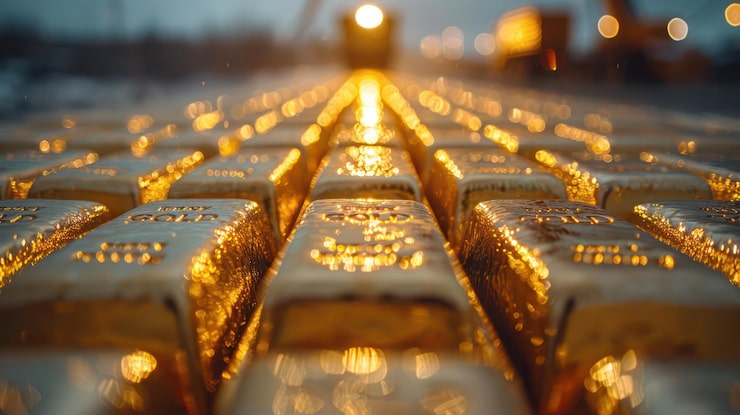
Gold is a metal with a presence unlike any other. Its color alone is enough to give it a special sense of prestige. It reminds us of the sun, warmth, stability, and value that does not easily fade. For this reason, gold has never been merely an ornament; it has always been a symbol of trust.
In calm times, we see it in jewelry, gifts, and special occasions.
In difficult times, people return to it as a way to preserve value.
In the investment world, it remains an asset almost everyone understands.
Why Gold Remains Powerful
- It is accepted in most markets around the world.
- It tends to preserve value over the long term.
- It can be traded relatively easily.
- It does not lose its essence when remelted.
- It is used for adornment, saving, and investment.
- It has a warm brilliance that never seems to age.
Gold does not need to demand attention to prove its value; its presence is enough.
Diamonds: When Pressure Becomes Beauty
Diamonds carry a profound lesson: some of the greatest beauty can be born from the harshest conditions. Formed deep within the earth under extreme pressure and heat, diamonds emerge as some of the hardest and most beautiful stones in the world.
Yet a diamond does not become remarkable merely because it has been extracted. Its true strength appears after cutting and polishing. This is where a rough stone becomes a piece capable of breaking light into extraordinary flashes of brilliance.
What Increases a Diamond’s Value?
- The quality of the cut and the precision of its angles.
- Its clarity and the limited presence of inclusions.
- Its color and overall purity.
- Its carat weight.
- Its overall symmetry and balance.
- The strength of its brilliance.
- The presence of a certificate that explains its specifications.
A diamond does not shine simply because it is precious. It becomes precious because it reflects light in a way unlike anything else.
Between Gold and Diamonds: A Union of Luxury and Strength
When gold and diamonds come together in a single piece, a rare balance is created between warmth and coolness, color and brilliance, stability and sparkle. Gold gives the piece its body and prestige, while diamonds give it its spirit and light.
That is why diamond-set jewelry is among the most meaningful choices for special occasions. It is not purchased only for decoration, but to express a deeper meaning: love, appreciation, achievement, a new beginning, or a memory meant to last.
What Makes Their Combination Special?
- Gold provides durability and luxury.
- Diamonds add light and distinction.
- Design brings value and beauty together.
- The piece can serve as both a memory and an emotional investment.
- It can be passed down as part of a family story.
- It expresses taste and status at the same time.
Some pieces are not simply worn—they are told as stories.
How Do You Read a Piece Before Buying It?
Smart buying does not begin with admiring the appearance; it begins with understanding the details. Many pieces may look beautiful under showroom lighting, but their true value becomes clearer once you understand the karat, weight, workmanship, stone quality, and whether an invoice or certificate is available.
Before buying, ask yourself: Am I purchasing beauty alone, or am I purchasing value that can be preserved?
Important Points Before Buying Gold
- Confirm the gold karat.
- Check the weight carefully.
- Ask about the gram price and workmanship cost.
- Request a detailed invoice.
- Check for a karat stamp where applicable.
- Compare prices in more than one place.
- Choose a design suitable for daily wear or special occasions.
Important Points Before Buying Diamonds
- Do not rely on size alone.
- Ask about clarity, color, and cut.
- Request a certificate that explains the specifications.
- Inspect the stone under natural light whenever possible.
- Make sure the stone is securely set within the piece.
- Understand the exchange or resale policy.
- Do not be deceived by brilliance alone.
A beautiful piece attracts the eye, but a trusted piece gives peace of mind.
Craftsmanship: The Difference Between an Ordinary Metal and a Work of Art
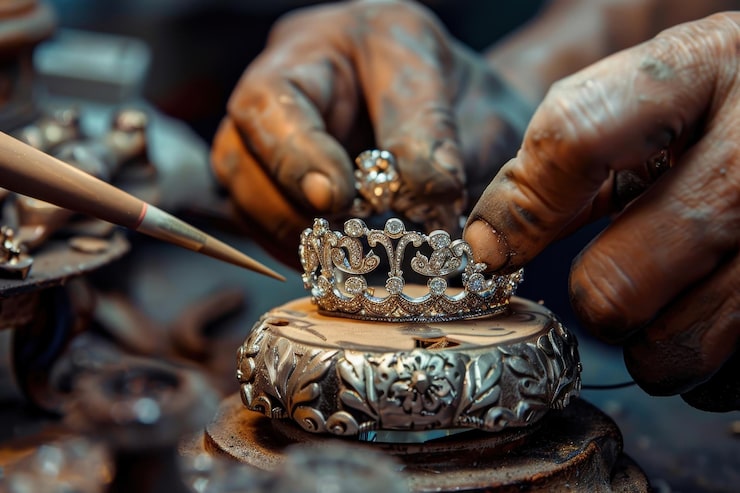
[Suggested image: A jeweler crafting a piece of jewelry with fine details]
There is a significant difference between gold as a metal and gold as a work of art. Craftsmanship is what transforms raw material into a design with character. A piece may be simple yet elegant, or detailed yet visually overwhelming. The secret lies in balance.
A skilled artisan does not simply create a shape; they create a feeling. They choose the curves, set the stones, consider the weight, prioritize comfort, and ensure that the piece looks beautiful from every angle.
Signs of Good Craftsmanship
- Smooth edges.
- Securely set stones.
- A balanced design.
- No visible scratches or gaps.
- Comfort when worn.
- Balanced weight.
- A refined shine that is not excessive.
Good craftsmanship does not need a long explanation; the eye sees it, and the hand feels it.
Care: How Do You Preserve the Brilliance?
[Suggested image: Cleaning gold and diamond jewelry with a soft cloth]
Even the most expensive pieces can lose their beauty when neglected. Gold may become scratched, and diamonds may lose part of their brilliance because of dust, oils, and perfumes. Care is not a luxury; it is part of preserving value.
Tips for Preserving Gold and Diamonds
- Store each piece in a separate box or pouch.
- Do not place jewelry pieces on top of one another.
- Avoid contact with perfumes and cleaning products.
- Do not wear valuable pieces during demanding work.
- Clean them with a soft cloth.
- Inspect stones periodically.
- Do not use strong cleaning materials without consulting a specialist.
- Store pieces away from moisture and scratches.
A small amount of care today preserves great value tomorrow.
Gold and Diamonds in the Future
[Suggested image: Luxury jewelry beside a digital screen showing certification and data]
The world is changing, and even luxury is becoming more intelligent. Today, buyers do not seek beauty alone; they want to know the origin of a piece, its details, its quality, and how its value can be verified. For this reason, the future of gold and diamonds will become increasingly connected to documentation, digital certificates, advanced inspection, and e-commerce.
Yet despite all this development, the essence of gold and diamonds will remain the same: rarity, beauty, and trust.
Features of the Future
- The spread of digital certificates.
- Greater importance placed on precise inspection.
- Growth in online jewelry sales.
- The use of three-dimensional design.
- Rising demand for documented pieces.
- Increased attention to sustainability and recycling.
- Consumers placing quality before appearance.
The future will not reduce the value of gold and diamonds; it will make that value clearer and easier to verify.
A Publishing Touch: Seven Golden Rules for Every Reader
[Suggested image: An elegant list titled “Golden Rules” beside a diamond ring]
- Do not buy gold or diamonds based on admiration alone.
- Understand karat, weight, clarity, and cut before paying.
- An invoice and certificate are part of a piece’s value.
- Size is not always proof of quality.
- A beautiful design should also be comfortable and durable.
- Continuous care preserves both brilliance and value.
- A precious piece is not the one that shines the most, but the one that combines beauty and trust.
Conclusion
Gold and diamonds are not simply symbols of luxury; they are a long story that brings together nature, time, humanity, and art. Gold teaches us the meaning of stability, while diamonds teach us that pressure can create unforgettable beauty. Between them, a universal language takes shape—a language of value, rarity, and permanence.
A genuine piece is not measured only by what the eye can see, but by the meaning it carries, the quality it proves, and the impression it leaves behind. That is why gold and diamonds remain more than adornment: they are a memory that shines, a value that endures, and a beauty that never fades.